Decoding the NASA budget pullback
China’s announcements arrive against the backdrop of the White House’s Office of Management and Budget releasing its so-called “skinny” budget, which proposed a 24% cut to the NASA budget and could have a profound effect on international cooperation if formalized.
Along with seeking to phase out SLS and Orion, the proposed budget confirms planned deep cuts to NASA science programs and would kill the lunar Gateway project; an international lunar orbit space station for which Europe, Japan, Canada and the United Arab Emirates had agreed to supply key elements.
Mars Sample Return — a joint project with the European Space Agency — also faces cancellation. That would leave China as the only country planning a mission long seen as the holy grail of Mars science. In addition, CNSA restated its announcement of opportunities for international payloads to fly on the Tianwen-3 Mars sample return mission, due to launch in late 2028. The NASA proposal does, however, state a new focus on putting the first human on Mars, which would allow for sample return at a future date.
Beating China back to the moon
A fact sheet accompanying the skinny budget claims it refocuses NASA funding “on beating China back to the Moon.” After phasing out SLS and Orion after Artemis 3—the planned return of humans to the moon—it would look to “more cost-effective commercial systems that would support more ambitious subsequent lunar missions.”
There is, however, no mention of a mission to seek water in the budget proposal, while China is preparing the precursor Chang’e-7 — again involving international cooperation— and Chang’e-8 missions to detect water ice and test ISRU technologies at the lunar south pole.
Opportunities for China?
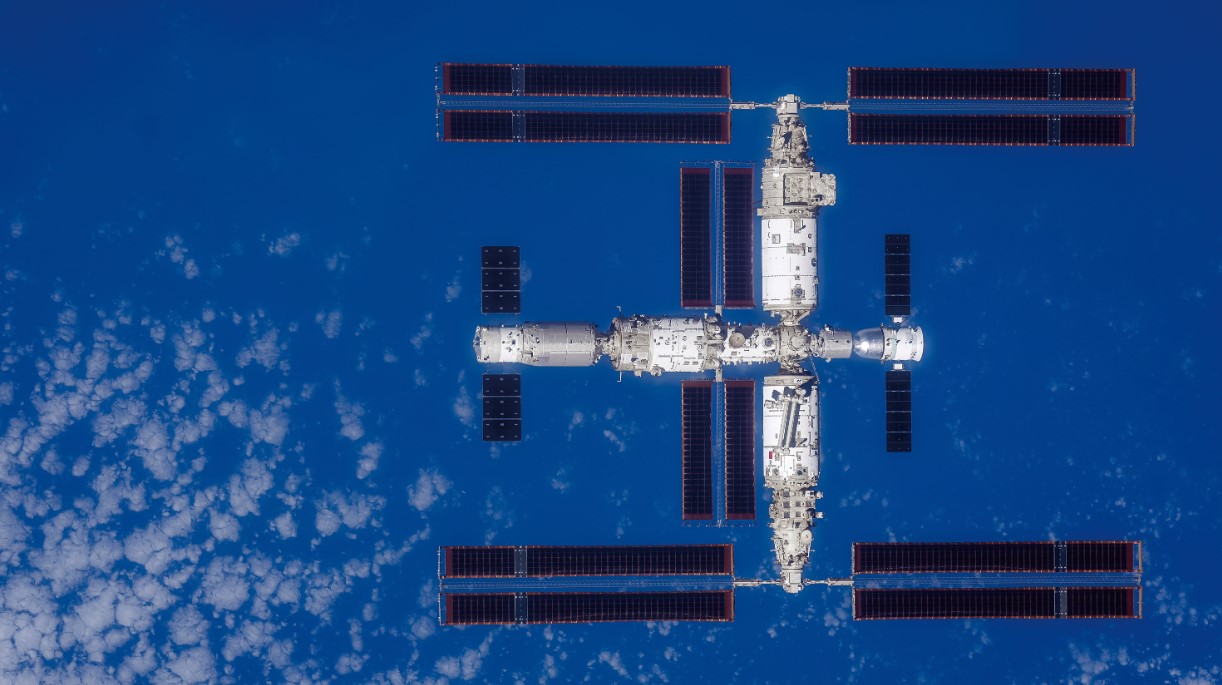
The budget also cuts funding for the International Space Station, which again could open opportunities for China, with the level of support for commercial ISS replacements not explicitly stated. Meanwhile, China announced earlier this year that it would train astronauts from Pakistan for a trip to the Tiangong space station and was in discussions with other countries.
While China’s list of partners in space remains limited to those in its political orbit and includes few established space powers—and the involvement of its most capable partner, Russia, in the ILRS moon base largely precludes potential ESA engagement—the potential changes to NASA’s relationships with its main partners could present Beijing with an opportunity.
With NASA’s direction and priorities under the Trump administration already uncertain, Europe was reported to be looking to deepen collaboration with partners such as Japan, India, South Korea and the UAE. China, while a more complex proposition, is also a consideration for further cooperation. For example, visions of the ILRS include a lunar orbit space station; there would, however, likely be significant geopolitical, technical and other hurdles to former Gateway partners engaging with China in such a project.
Shenzhou-20 and crewed moon update
China launched a new three-person crew to its Tiangong space station April 24 aboard Shenzhou-20. The Shenzhou-19 crew, having completed their six-month stint in orbit, handed over control of the station to the new crew and returned to Earth April 30, a day later than planned due to high winds at the landing site.
Additionally, an official with China’s human spaceflight agency, CMSEO, used a Shenzhou-20 pre-launch press conference to update on the country’s crewed lunar plans:
- Development of the Long March 10 rocket, Mengzhou crewed spacecraft, Lanyue lunar lander, Wangyu spacesuits, and the Tansuo lunar rover is proceeding on schedule, according to Lin Xiqiang of CMSEO.
- Ground systems, including launch, tracking, and recovery infrastructure, are also reportedly progressing in line with the 2030 lunar landing timeline.
This progress, if little publicized, has not gone unnoticed outside of China, prompting an explicit response in the new NASA budget proposal.
Equatorial spaceport?
In another international development, the China Great Wall Industry Corporation last month reached an agreement to study establishing a near-equatorial spaceport in Malaysia. If the project were to go ahead, it would demonstrate “confidence that the Chinese government thinks it can sustain a major spaceport outside of its own borders,” while delivering launch options and benefits.
|